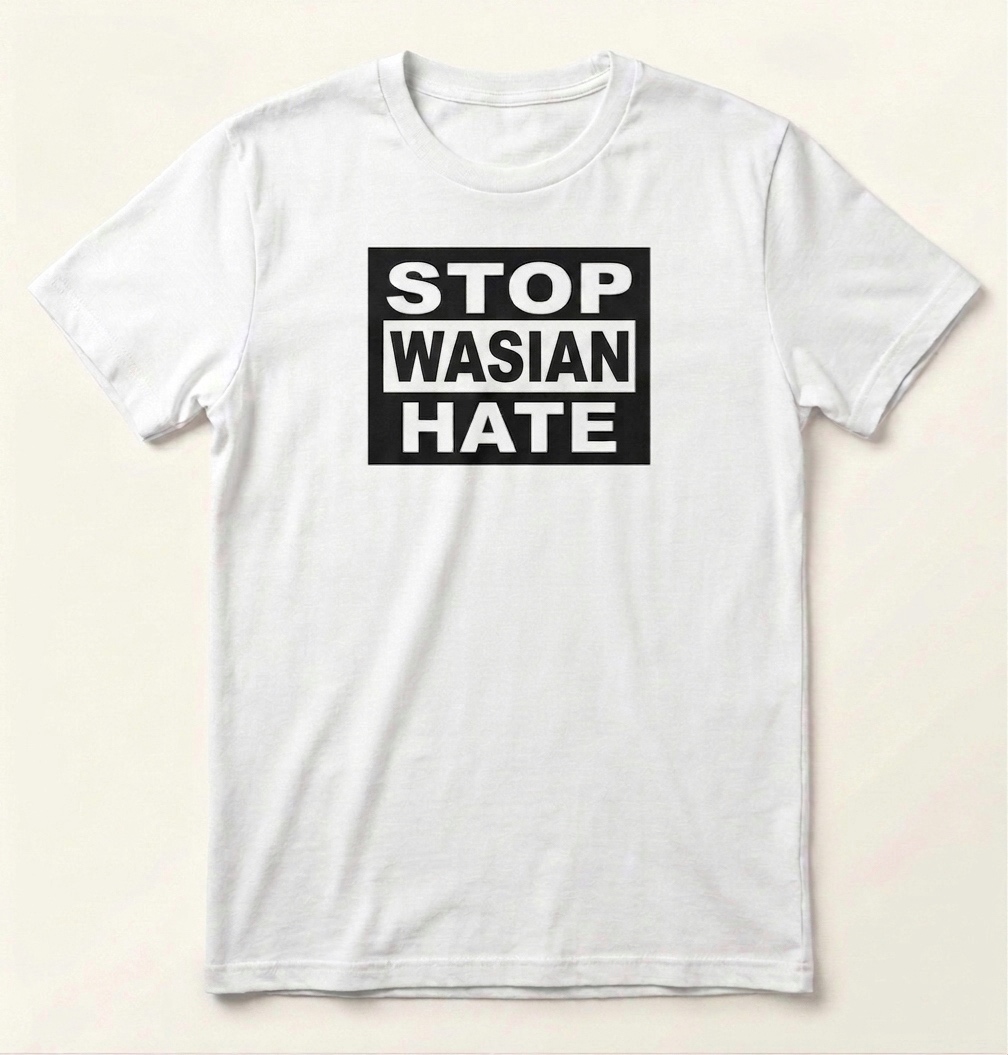
A movement for the in-between
Not Asian enough. Not white enough. Always enough to hate.
Wasian people — those of mixed white and Asian descent — live in a quiet doubled exile. Rejected by both halves of their heritage, mocked for the foods they eat, the languages they don’t speak, and the faces that don’t fit. This is a movement to name what is too often unnamed.
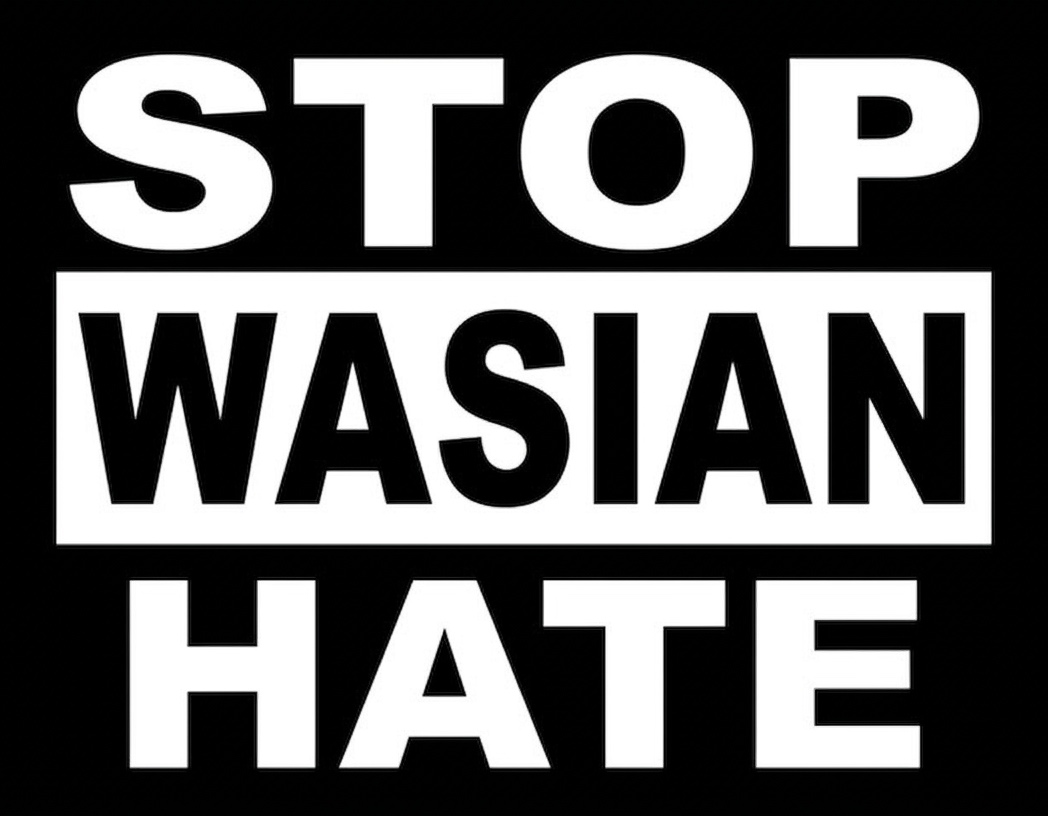
Coming soon
Wear the in‑between.
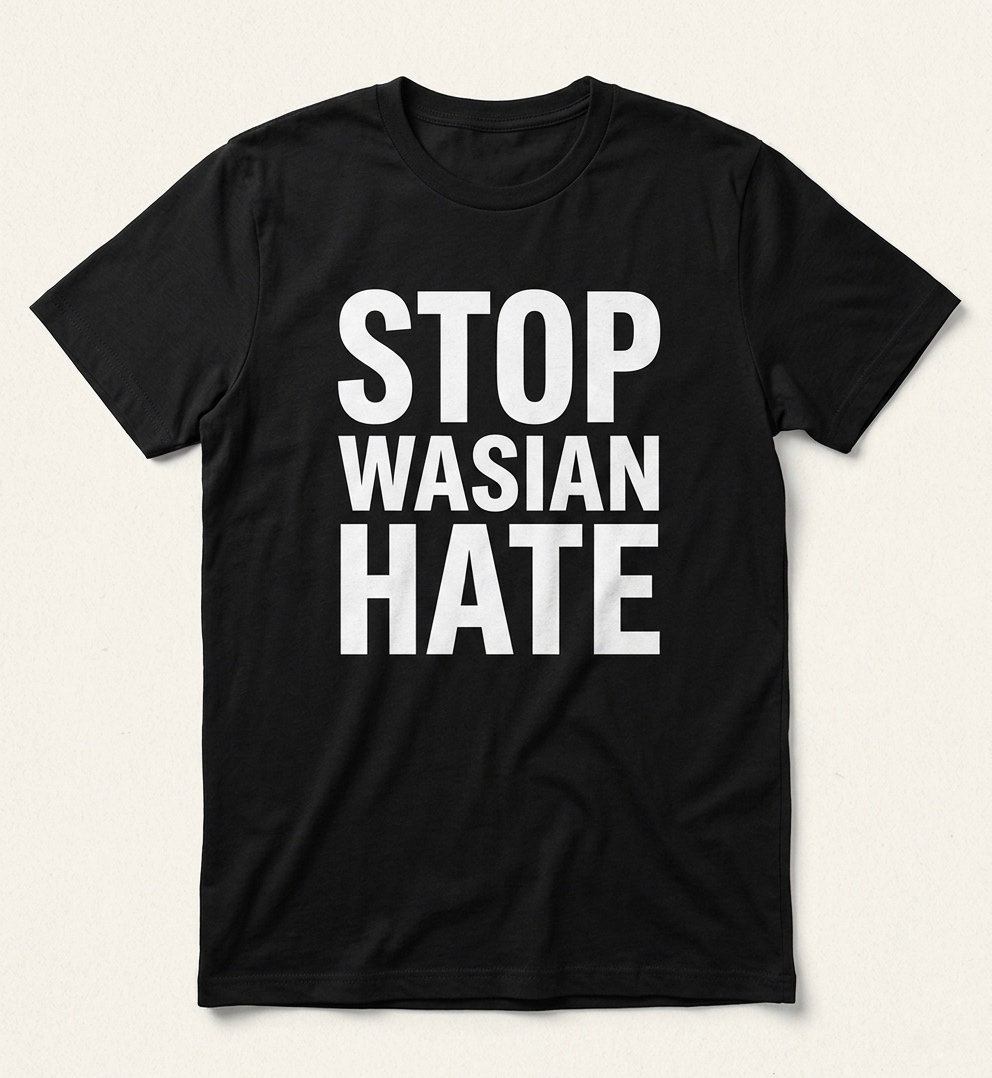
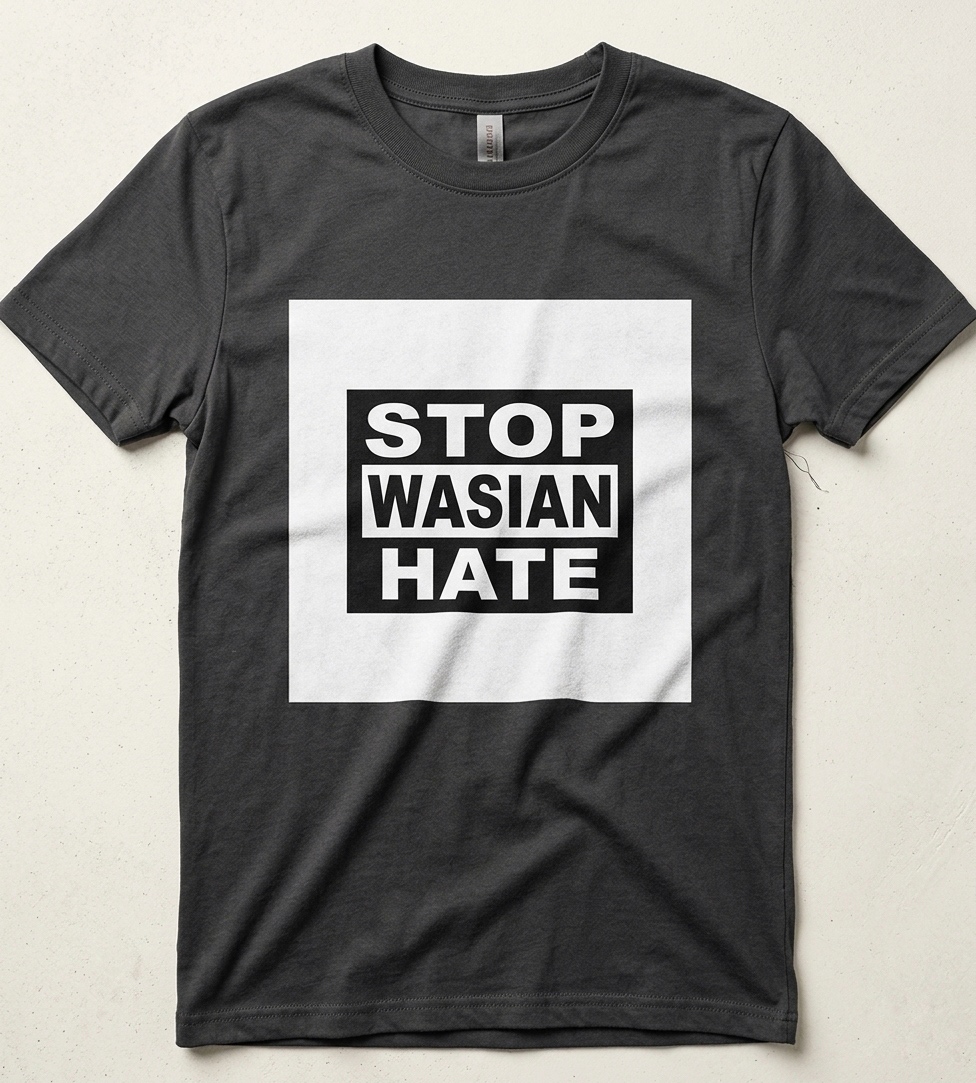
A small first run of tees carrying the Stop Wasian Hate mark. Sizes XS–3XL, from $18. Limited drop. Proceeds support the work.
A fitted tee with a soft feel and a clean, modern look. The cotton‑poly blend is lightweight and breathable, and holds its shape and colour over time — worn on its own or layered.
01 — The Issue
A hatred that hides
A hatred that hides
inside belonging.
Anti-Asian violence has a name and a movement. Anti-Wasian violence has neither — and so it festers in the spaces between definitions. A racial slur that doesn’t quite land. A door that never quite opens. A community that loves you, until it measures you.
Excluded by both sides
Asian–white biracial people report feeling more accepted by white people (62%) than by Asian people (47%). The community that should feel like home keeps the door half-closed.
Authenticity policed
“You’re Asian?” “No way you’re Korean.” The constant audit of features, fluency, and food is a thousand small violences dressed up as curiosity.
Mental health cost
A UC Davis study found 34% of biracial Asian Americans had psychological diagnoses — twice the rate of their monoracial Asian peers. Limbo has a price, and Wasian people are paying it.
Erased from the conversation
The Stop Asian Hate movement gave language to a generation. But many mixed-Asian people watched from the edges, unsure if the grief, the fear, and the solidarity were theirs to claim.
02 — Voices
In their own words.
Drawn from personal essays, op‑eds, and public reflections by Wasian writers. These are not abstractions. These are people.
I’ve never been Asian enough to be Asian, and never been white enough to be white. I’m stuck in this limbo between two worlds, and I gotta tell you— it sucks.
Nobody knows that I am Asian at all. Many think I’m Caucasian, or mixed and Latina, but never Asian. I don’t fit into any Asian communities here—not because I am not Asian, but because I don’t look Asian enough. When people see you in a way that is inaccurate, or don’t see you at all, it shapes your identity in dramatic ways.
Classmates held their noses when I opened my lunchbox. Even my best friend would wrinkle her little button nose on instinct.
Did they only see me as a fan of Korean culture — rather than a Korean participating in her own culture?
To be Wasian is to be considered foreign to your Asian heritage, and not white to your white heritage. Whiteness always selects against those who are not white enough. The Asian side reads “white-washed.” The white side reads “exotic.” Neither reads home.
People say it’s good to be unique. Well alright — but it is sure as hell lonely.
03 — By the Numbers
What the data
What the data
refuses to hide.
identified as White-Asian in the 2020 U.S. Census — the 4th largest multiracial combination, and one of the fastest growing.
in the adult White-Asian population between 2000 and 2010 — an identity arriving faster than the language to describe it.
of biracial Asian Americans report a psychological diagnosis — nearly twice the rate of monoracial Asian Americans.
of Wasian adults feel accepted by Asian people — against 62% who feel accepted by white people. The math of being half is rarely symmetrical.
Sources: Pew Research, U.S. Census Bureau, UC Davis Health (psychological outcomes in multiracial Asian Americans).
A manifesto
We are not a fraction. We are not a footnote.
We are not the “ambiguous” choice on a form,
or the punchline of an inside joke
we were never quite inside of.
We refuse the lie that belonging requires purity.
We refuse the audit at the door.
We refuse to be the bridge that gets walked on.
— Stop Wasian Hate
04 — What you can do
Small acts.
Small acts.
Loud consequences.
Stop the audit.
Retire “but where are you really from?” Retire “you don’t look it.” Curiosity is fine. Demanding proof of identity at every door is not.
Make room at the table.
In Asian student unions, cultural orgs, family gatherings — the question is not whether mixed people are Asian enough. The question is what makes the table feel like home.
Listen without measuring.
When a Wasian friend tells you about a slur, a microaggression, an exclusion — don’t calculate how Asian or how white they are first. Just hear them.
Share the language.
Movements need vocabulary. Talk about Wasian erasure. Share this page. Name what was nameless. Until the wound has a word, the healing has nowhere to start.
Take the pledge.
I pledge to stop policing the racial authenticity of the people around me. I pledge to make my communities, my classrooms, and my family tables places where mixed people belong without qualification.